
Clinging to Eden
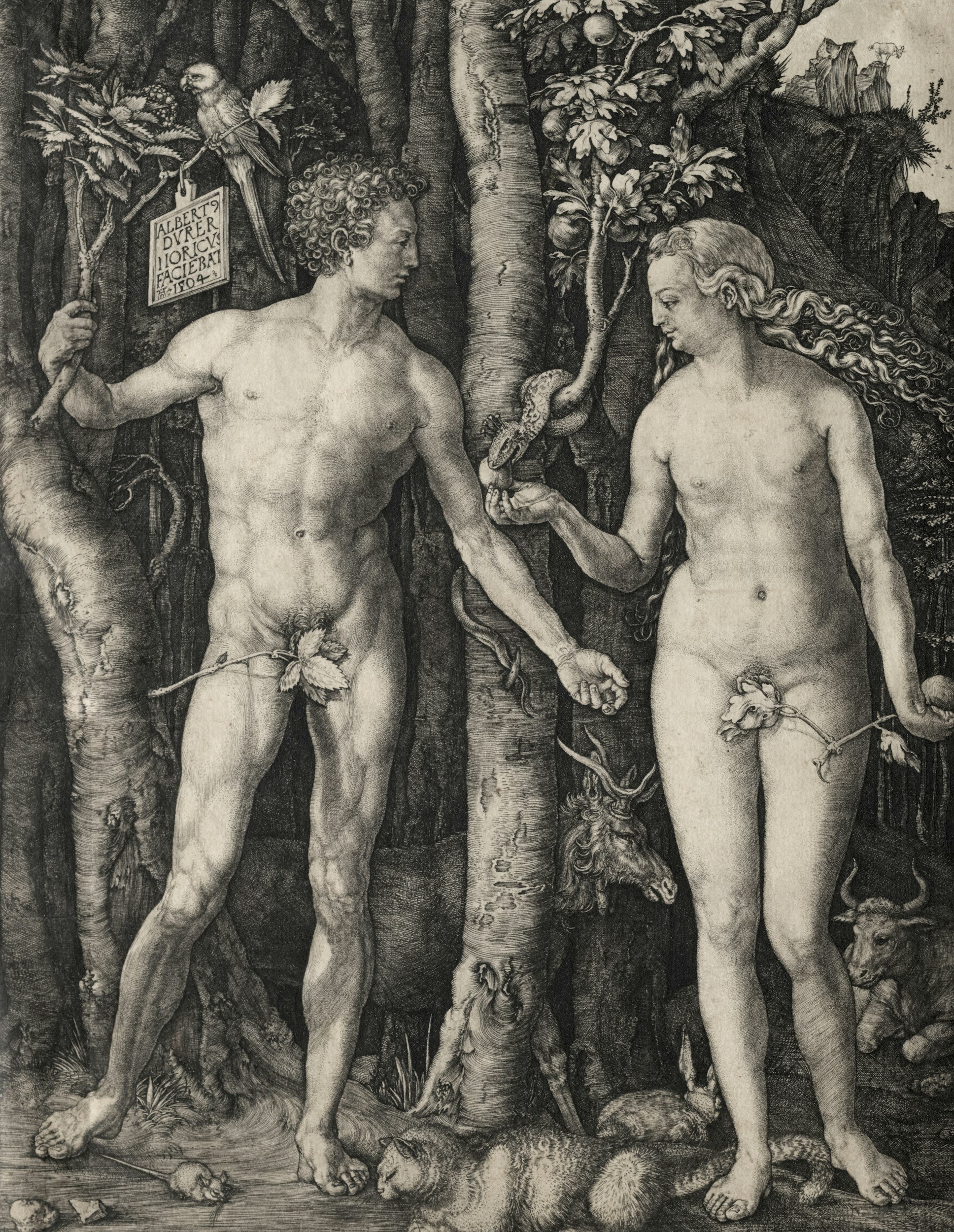
The Garden of Eden where Adam and Eve spent time after their creation seemed to be a beautiful and peaceful existence. I imagine this is why a great portion of the Christian world sees Eve as weak or even evil because she made the choice to eat of the fruit and to leave the Garden permanently.
In the Church of Jesus Christ of Latter-day Saints, along with some other traditions, we believe in what is sometimes called the "fortunate fall." We believe that Eve made a difficult choice, but that choice allowed for humankind to come to earth and to learn and to grow. Interestingly, in Genesis 2:16-17, Adam alone is commanded not to eat of the tree of knowledge of good and evil before Eve was created. It is in vs. 18-25 where Eve was created. Perhaps Eve was not under the same command as Adam with the tree of knowledge of good and evil. She did not make a disobedient choice at all. But Adam needed to choose whether to follow her in order to obey the command to multiply and replenish.
At any rate, this is a difficult choice. It was a risky choice to go out of Eden and paradise and into a difficult world where there were difficulties, yet also the potential for the greatest joy and growth. Having children and a family and posterity is a beautiful blessing, but as most of us can attest, it can be one of the most difficult things. While it is the source of one of the greatest joys, it has the potential for the greatest hurt as well. Additionally, the ability to experience sin and pain allow us to grow and to become, and find immense joy and satisfaction and relation with God and Christ. In some of the most painful moments in my life, I have felt at the same time, a deep peace, love, and connection with God and Christ. A depth I don't believe I would be capable of without the experience of the pain.
But with this mortal experience that Adam and Eve made possible, God and Christ knew it would be difficult and almost insurmountable. This is why they provided the Atonement of Christ. Through this what I sometimes like to call the perfect insurance policy; we are covered (love this too because the Hebrew "kaphar" means to cover or atone). While sin brings much pain to this mortal world, I believe God did want us to sin in some ways. Not to sin with the intent to bring pain, but with the intent to take the risks we need to take to learn. Think of a baby first learning to walk. I have never seen the baby just take off and start walking without falling. God knew we would sin and fall. Additionally, He knew that our sins would often hurt others. Yet, we need each other. The Atonement is enough to cover all of those sins. Not only our own, but the sins of others. That doesn't mean there is no pain from the sins. Though I don't understand how it is done, I do believe that ultimately God's power through Christ's Atonement has the power to not only make us whole from sin (ours and others), but to make us better than if we had never had the experience with sin. I like to think of the Japanese art of kitsugi as a good analogy for this. (This is where they take broken pottery and glue it together with a glue including gold, making a beautiful piece of pottery from the broken pieces.)
Although I have been taught about the saving power of the Atonement for my entire life, I had a great fear of sin. I had church lessons that taught about every sin hurting Christ and how I didn't want to hurt Him even more. I understood that Christ could or had paid for my sins, but that was the worst case scenario. The goal was the least amount of sin possible. I have since realized that while the purpose is not for me to sin, the overarching purpose is not to completely avoid sin either. Sin is a means to growth and becoming. It is a way of learning through failure and difficulty. The falling is necessary to practice getting back up. But my attitude of completely avoiding sin was kind of like clinging to the Garden of Eden. I avoid some pain if I don't sin, life might be easier in some ways--like Eden was easier in many ways for Adam and Eve. But if I don't sin or allow for the risk of sin, I cannot grow and am stunted or stuck in some ways. If Adam and Eve didn't come into the mortal world, growth for humankind would be stuck and stunted. When we don't understand and use Christ's Atonement, that is when we are stuck. When I look back on things that happened in the past and wish they had never happened, that cannot be. And when I wish that, I am stuck. I can't move past it and am not understanding or forgetting that Christ's Atonement has the power to transform any hurt or sin and make me even better than before. That often doesn't happen in a moment, but I have seen it happen. Just like the exquisite connection I feel with God and Christ in the midst of pain. It makes sense to cling to Eden. But can our faith in Christ's Atonement allow us with time to move not just past, but above any hurt we experience?
So when I am feeling stuck, frustrated, out of control, discouraged, or damaged, part of me is wishing for Eden. It's a clue to me that I am not fully understanding and partaking of the Atonement of Jesus Christ. The growth through Christ's Atonement is a process that takes time for the pain to process. The idea is not to never have pain, it is not to not grieve. But it is that over all, to have faith and hope. In the midst of the pain and hurt, there is hope for things to be better than they ever have. When I can continue to access that hope and faith--even in bits--that is moving towards growth and no longer clinging to Eden.